
Medicines on a plane: what you can take in the cabin and what to check
- By Patrik Kolenak
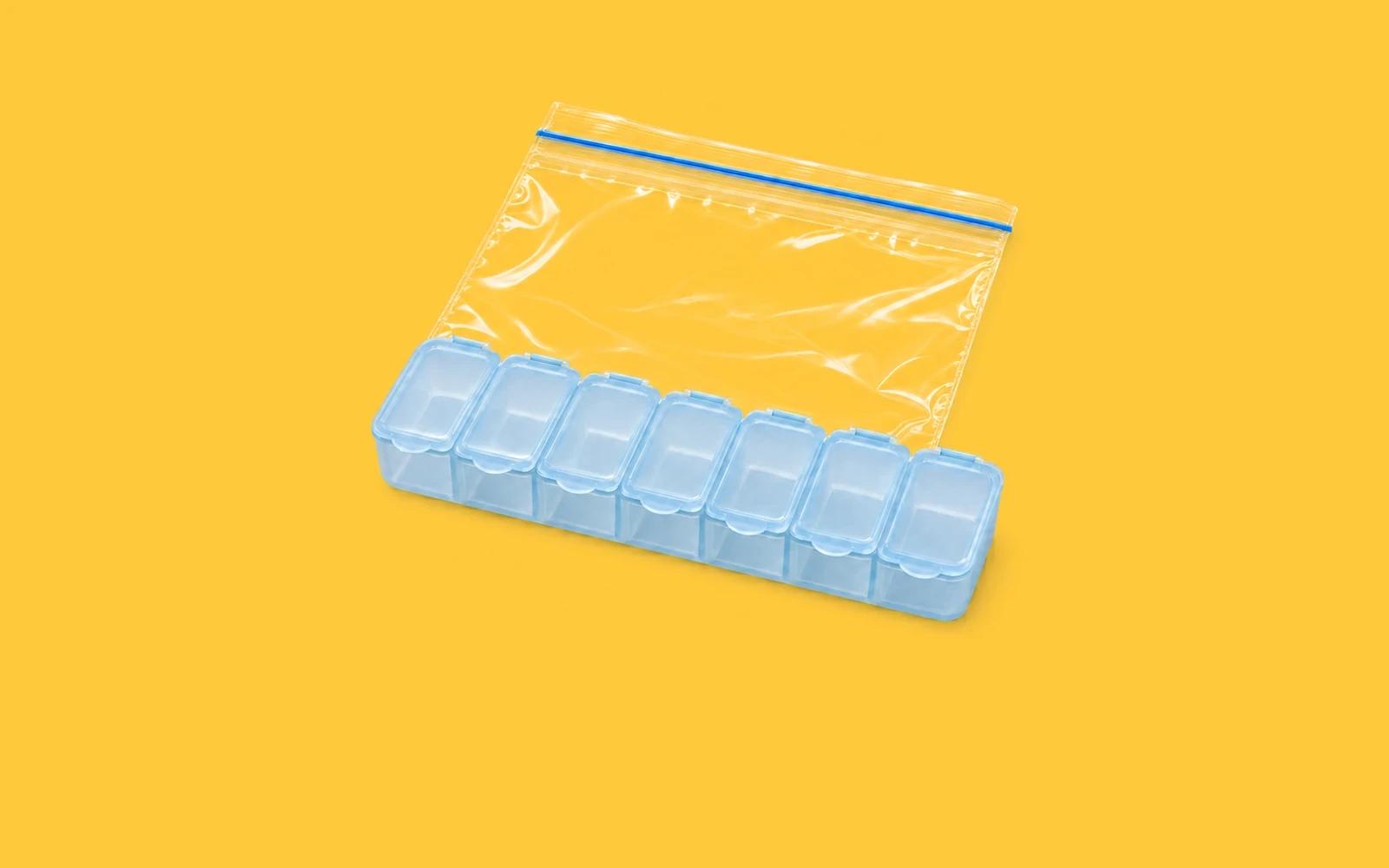
Medicines on a plane go in your hand luggage, and liquid medicines are exempt from the 100 ml per container limit that applies to other liquids in the EU. Ryanair’s terms and conditions (in force from 25 June 2026) state explicitly that medicines, both over-the-counter and prescription, do not belong in checked baggage but in the cabin.
Why medicines belong in your hand luggage
Checked baggage can be delayed or lost, or it may only reach you after landing. That is why clause 8.7.2 of Ryanair’s terms and conditions lists items that must not go in checked baggage and should be in the cabin: they include “medicines (prescription or non-prescription)”, as well as documents, keys and jewellery. Wizz Air lists medicines among the items it is not liable for if they are lost, damaged or delayed in checked baggage (checked on 26 November 2026). So keep whatever you need during the journey or straight after it with you.
So do not pack the medicines for your whole stay only in your suitcase; keep at least the doses for the first few days in the cabin. For what else not to forget, see our checklist of what to pack for the airport. How to prepare for a flight with a health condition is covered in the article health on a plane.
Liquid medicines over 100 ml
According to the European Commission, liquids in the cabin must be in containers of no more than 100 ml, packed in one clear, resealable 1-litre bag. Medicines, special dietary requirements and baby food are exempt from this rule. Liquid medicines therefore do not have to meet the 100 ml limit. The general rules for liquids, cosmetics and duty free purchases are in the article liquids and cosmetics on a plane.
According to Bratislava Airport, you do not need to take liquids in containers of up to 100 ml out of your bag there. Liquid medicines over 100 ml that you carry for medical reasons should be taken out and placed in a tray before security. The full procedure is in our article on security screening.
A doctor’s note and the original packaging
Needles, injections and insulin
Insulin and other injectable medicines go in your hand luggage like any other medicine. However, Wizz Air’s hand luggage page lists syringes among the items your hand luggage must not contain, alongside knives, scissors and other sharp objects (checked on 26 November 2026). For medical advice, such as how to store insulin, ask your doctor.
Medical devices and oxygen
- Item · Ryanair, according to its terms and conditions
Medical devices in the cabin
You need to contact the special assistance line and get a “cabin baggage waiver” letter, which you show at the gate.
Medical devices in checked baggage
A “checked baggage waiver” letter from the same line, which you show at bag drop.
Medical devices for reduced mobility
You can take the medical devices you need for your stay free of charge.
Oxygen
You cannot bring your own oxygen on board. You have to request it when you book, no later than three days before departure, and there is a charge.
| Item | Ryanair, according to its terms and conditions |
|---|---|
| Medical devices in the cabin | You need to contact the special assistance line and get a “cabin baggage waiver” letter, which you show at the gate. |
| Medical devices in checked baggage | A “checked baggage waiver” letter from the same line, which you show at bag drop. |
| Medical devices for reduced mobility | You can take the medical devices you need for your stay free of charge. |
| Oxygen | You cannot bring your own oxygen on board. You have to request it when you book, no later than three days before departure, and there is a charge. |
The table is based on Ryanair’s terms and conditions in force from 25 June 2026, checked on 25 November 2026. On its restricted items page, Wizz Air lists medical devices that may be used throughout the flight: pacemakers, hearing aids, implanted medical devices and electrical nerve stimulators (checked on 26 November 2026). If you need help at the airport, see assistance at Bratislava Airport.
Medicines containing narcotics abroad
When you travel to another Schengen country with medicines containing narcotic or psychotropic substances, a standard certificate under Article 75 of the Convention implementing the Schengen Agreement is used, known as the Schengen certificate. Under the decision of the Schengen Executive Committee of 22 December 1994 (SCH/Com-ex (94) 28 rev.), it is issued or authenticated by the competent authorities of a country for people permanently resident there, on the basis of a medical prescription. It is valid for no more than 30 days, a separate certificate is needed for each substance, and a doctor may prescribe no more than a 30-day supply for the trip.
What to check before you fly
- Pack your medicines and the documents for them in your hand luggage.
- For liquid medicines, keep the prescription or the name of the medicine to hand and be ready to show them at security.
- For medical devices and oxygen, contact the airline in good time; with Ryanair no later than three days before departure.
- For medicines containing narcotic or psychotropic substances, get the certificate before travelling to another Schengen country.
Your parking price
62 €
7 days · 8.86 € per day · incl. VAT
No hidden fees. Final price. Transfer to the airport and back included.
Frequently asked questions
Can I take medicines in my hand luggage?
Yes, hand luggage is exactly where medicines belong. Ryanair’s terms and conditions (clause 8.7.2) state that prescription and over-the-counter medicines should not be in checked baggage but in the cabin. Wizz Air is not liable for medicines in checked baggage.
Does the 100 ml limit apply to liquid medicines too?
No. According to the European Commission, the limit of 100 ml per container in one clear 1-litre bag applies to ordinary liquids, but medicines are among the exemptions. At Bratislava Airport, take liquid medicines over 100 ml out and place them in a tray before security.
Do I need a doctor’s note for my medicines?
For medicines containing narcotic or psychotropic substances, travelling to another Schengen country requires a certificate issued on the basis of a medical prescription, valid for no more than 30 days. For medical devices, Ryanair requires a letter from its special assistance line. A prescription or medical report is useful for ordinary medicines too.
Can I take insulin and needles on a plane?
Insulin goes in your hand luggage like any other medicine. However, Wizz Air lists syringes among the items your hand luggage must not contain (checked on 26 November 2026).
Should I put medicines in my checked baggage?
No. Clause 8.7.2 of Ryanair’s terms and conditions lists medicines among the items that do not belong in checked baggage. Checked baggage can be delayed or lost, so keep the medicines you need with you.
Tukan Parking: your car 7 minutes from the terminal
Open 24/7, airport transfer included, free cancellation. Choose your dates and you will see the price right away.
Sources and photos
- EUR-Lex: Decision of the Executive Committee SCH/Com-ex (94) 28 rev., checked on 26 November 2026
- Wizz Air: Cabin baggage, checked on 26 November 2026
- Wizz Air: Checked-in baggage, checked on 26 November 2026
- Wizz Air: Restricted items, checked on 26 November 2026
- European Commission: Liquids, aerosols and gels, checked on 26 November 2026
- Ryanair: Terms and conditions, in force from 25 June 2026, checked on 25 November 2026